Learn how to import timber into the EU: supplier checks, required documents, EUDR compliance, customs duty, and realistic shipping timelines.
To import timber into Europe you need a checked supplier, a complete document file, and a Due Diligence Statement under the EU Deforestation Regulation. Most orders take two to five months from first enquiry to delivery.
Check your supplier first
Four things to confirm before you order:
- Business registration in the country of origin
- Valid export licence
- Certification that is still in date
- A real yard or mill behind the website
Ask for the issue date on each certificate. A licence from three years ago proves nothing today. Not sure whether you need a certified supplier at all? See certified vs non-certified hardwood.
Sellers on GTH are checked on all four points before they can list.
Documents you need
- Invoice and packing list, from your supplier
- Bill of Lading, from the shipping line
- Phytosanitary certificate, from the plant health authority in the origin country
- Harvest permit, from your supplier
- V-Legal or FLEGT licence, for Indonesian timber
- Geolocation file, from your supplier
- ISPM15 marked pallets and dunnage, from your supplier
Two notes. Phytosanitary rules depend on species and treatment, so check the requirement for your product before ordering. ISPM15 covers the wood packaging, not the timber itself, and the stamp replaces the need for a separate certificate.
Geolocation is what suppliers struggle with most. If yours has never recorded plot coordinates, allow four to eight weeks.
EUDR rules
Timber must be deforestation-free, legally produced, and covered by a Due Diligence Statement filed in the EU TRACES system. For the full compliance breakdown, see our EUDR guide for importers and EUDR explained for timber buyers and sellers.
- Large and medium-sized businesses: EUDR requirements begin on 30 December 2026.
- Small and micro businesses will follow from 30 June 2027.
The DDS reference number goes on your customs declaration. Without the DDS reference number, customs cannot release your goods. Penalties reach at least 4% of annual EU turnover, plus confiscation of the timber and any revenue from it.
Duty and VAT
Duty depends on your commodity code. Check the rate in the EU TARIC database before you price the deal. Many tropical sawn timber codes carry no duty, and GSP countries including Indonesia can qualify for a zero rate with a valid statement on origin. VAT is charged according to the applicable rate in the EU country where the timber arrives.
How long it takes
- Find and check supplier: 1 to 3 weeks
- Quote: 3 to 10 days
- Order confirmed: 1 to 2 weeks
- Production, if not in stock: 4 to 12 weeks
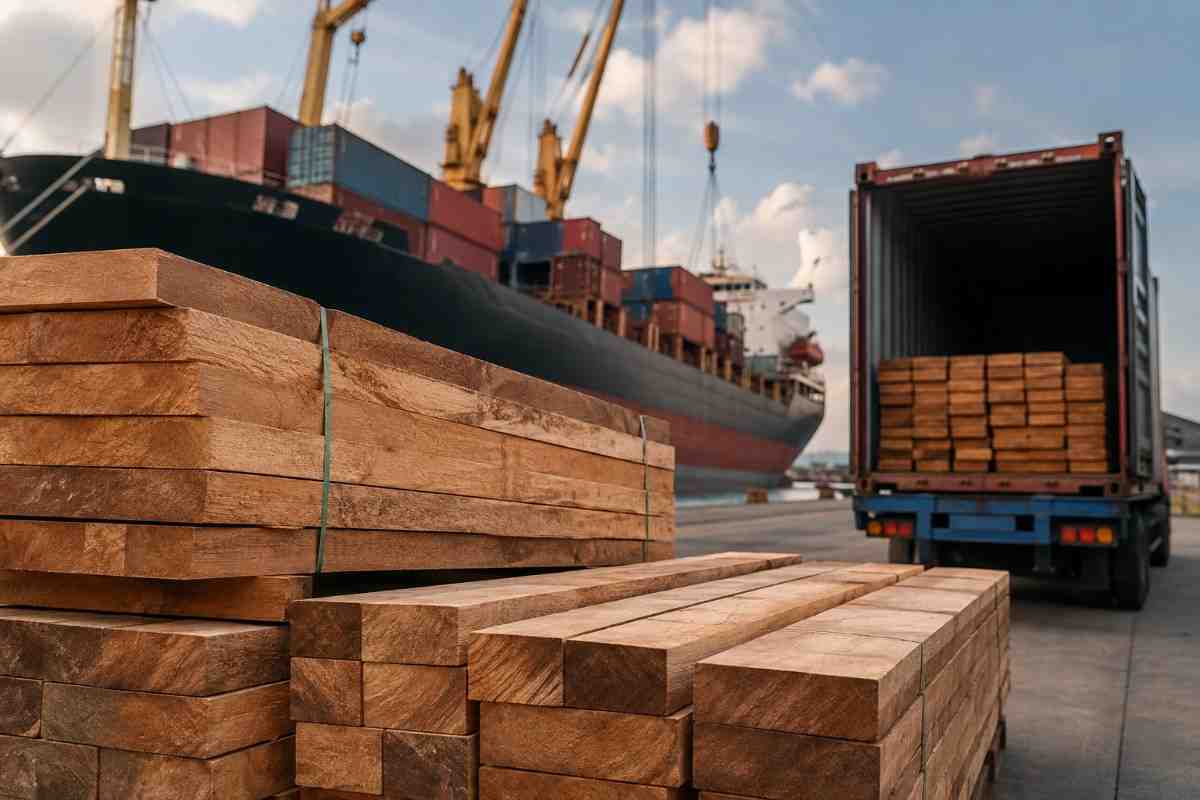
- Sea freight to Northern Europe: 30 to 45 days
- Customs: 2 to 7 days
Ready stock takes two to three months. Made to order takes three to five.
Three mistakes to avoid
- Agreeing a price before asking about documents
- Trusting the sample. Samples are picked. Shipments are not.
- Treating “capability to manufacture” as “ready to ship.” The difference can be three months.